Language school
Age: 15/16 years old
Level: Intermediate
Allotted time per lesson: 1hr and 30 minutes
The students are going to work with fairy tales.
They defined what a fairy tale is and they also mentioned the most common ones in a brainstorming activity. Then, the teacher divided the students into 3 groups. Each group was assigned with a fairy tale in a raffle.
Age: 15/16 years old
Level: Intermediate
Allotted time per lesson: 1hr and 30 minutes
The students are going to work with fairy tales.
They defined what a fairy tale is and they also mentioned the most common ones in a brainstorming activity. Then, the teacher divided the students into 3 groups. Each group was assigned with a fairy tale in a raffle.
The fairy tales are the following:
Little Red Riding Hood - Grimm Brothers

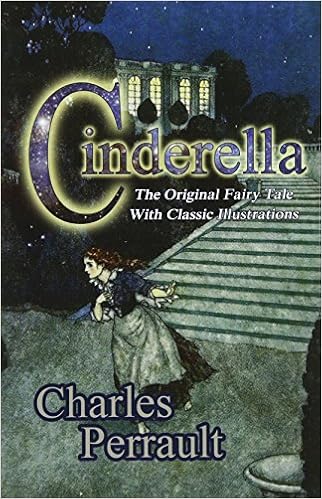
Cinderella - Charles Perrault
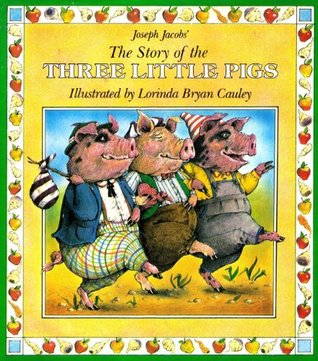
The Three Little Pigs - Joseph Jacobs
Cinderella - Charles Perrault
The Three Little Pigs - Joseph Jacobs
FAKEBOOK - LESSON #1
They will have to create a profile in Fakebook of the author of the fairy tale. They will have to use the information they gathered using the websites. Students are familiar with Facebook, the social network, so they will find this variation interesting and engaging.
WARMER
As homework, the students had to read about the authors by themselves. They could use any source. In class, the teacher will give each group some statements about each author and the students will have to discuss in the groups if the statements are true or false. Then, they share as a whole class.
WEB
The teacher will give each group websites to explore and find information about the authors. They will have to take down notes about the following items:
- When were/was the author(s) born? Where?
- Where did he/they live?
- What fairy tales did he/they write?
- Write any two or more facts about the author(s) you and your group find interesting.
Grimm Brothers websites:
Charles Perrault websites:
Joseph Jacobs websites:
 The teacher will show them a tutorial which explains how to use Fakebook at https://beluictple.blogspot.com/2018/10/new-tutorials-fakebook.html
The students will go to http://www.classtools.net/FB/home-page and start working on the profiles.
WHAT’S NEXT
The Fakebook profiles will be shown through a projector and each group will tell the rest about their author. While a group is presenting their author, the rest of the students will have to see if there are any similarities among the authors: about the fairy tales they told, the period of time they were alive, the way they told the fairy tales, etc.
Then, they will print the fakebook profiles (if possible) at the language school and will paste them in a shared wall for all the courses to know about the authors.
As a homework, each group will have to read the fairy tale that was assigned to their group:
Little Red Riding Hood - Grimm Brothers
Cinderella - Charles Perrault
The Three Little Pigs - Joseph Jacobs
Theoretical Frameworks
The TPACK Framework
Technological Pedagogical Content Knowledge (TPACK) attempts to identify the nature of knowledge required by teachers for technology integration in their teaching while addressing the complex, multifaceted and situated nature of teacher knowledge.
Even though the “Content” part is not applied in this lesson, the Pedagogical Knowledge (PK) is. “Teachers’ deep knowledge about the processes and practices or methods of teaching and learning. They encompass, among other things, overall educational purposes, values, and aims. This generic form of knowledge applies to understanding how students learn, general classroom management skills, lesson planning, and student assessment.” (Koehler & Mishra, 2009)
In this lesson, the teacher is aware of how 2018’s students learn. The use of Fakebook in the class makes the activity of creating a profile of an author more meaningful and engaging.
Also, the Technology Knowledge (TK) is applied. “Technology Knowledge (TK) – Knowledge about certain ways of thinking about, and working with technology, tools and resources and working with technology can apply to all technology tools and resources [...]” (Koehler & Mishra, 2009).
The teacher is well informed about how technology can be used in the classroom to change the traditional ways of teaching and learning.
SAMR Model
The Substitution Augmentation Modification Redefinition Model offers a method of seeing how computer technology might impact teaching and learning. It also shows a progression that adopters of educational technology often follow as they progress through teaching and learning with technology. (Ruben Puentedura, 2006)
The use of Fakebook in this lesson belongs to the Modification step in the SAMR Model because without technology the task wouldn’t be possible to be achieved. Technology allows for significant task redesign. Fakebook was designed for students to create profiles for educational purposes and it would not have the same impact if students are asked to create the profile on paper. This is one of the first steps over the line between enhancing the traditional goings-on of the classroom and transforming the classroom.
References:
TPACK.ORG. (n.d.). Retrieved from http://www.tpack.org/
SAMR Model - Technology Is Learning. (n.d.). Retrieved from https://sites.google.com/a/msad60.org/technology-is-learning/samr-model
TPACK.ORG. (n.d.). Retrieved from http://www.tpack.org/
SAMR Model - Technology Is Learning. (n.d.). Retrieved from https://sites.google.com/a/msad60.org/technology-is-learning/samr-model



No hay comentarios:
Publicar un comentario