Language school
Age: 15/16 years old
Level: Intermediate
Allotted time per lesson: 1hr and 30 minutes
SIX WORDS MEMOIRS - LESSON #3
WARMER
The teacher will paste some cards on the board with sentences. These sentences will actually be six-word-stories.
For example:
“POISONED APPLE DISLODGED. COFFIN TO ALTAR”
“CURSED SHE SLEPT.KISSED SHE AWOKE”
“CHILDREN ABANDONED IN FOREST.RETURNED WEALTHY”
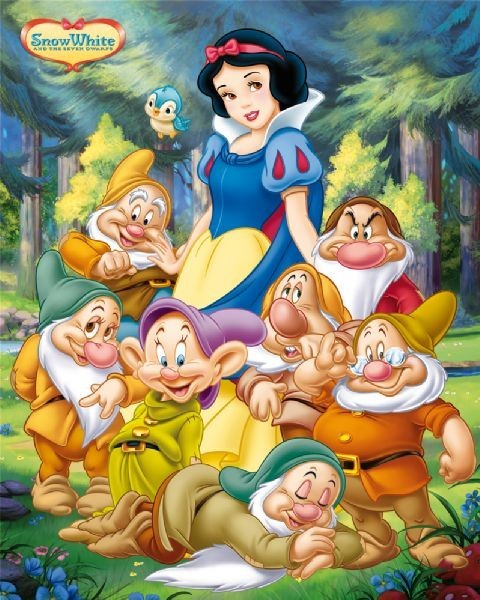


She will also paste some pictures of fairy tales. Some students will go to the board and match the sentences to the correct picture.
Then, she will lead a discussion about the sentences and will introduce the idea of “Six-word stories”. Some questions that can be asked to trigger the discussion can be:
- Look at these sentences, do they tell what each of the fairy tales is about?
- What is the difference between telling the whole story and telling the story in a short sentence?
After the teacher explains what a “six-word story” is, she will tell the students they are going to write a six-word story based on the fairy tale they have been working with. To do this, they will first write some drafts. This activity could be done individually, in pairs or the whole group (the groups in which they are since lesson 1). They get to choose.
WEB
First, students will follow a tutorial about Six-Word Memoirs in this link After that, students can start using the tool and writing their six-word stories. They will have to save it in the “Teens” topic and attach a picture with it.

Then, they will have to take a screenshot of the six-word story, save it and send it to the teacher by email.
Finally, the students will have to post the screenshots of their six-word stories on their virtual classroom and add the following question with options for other students and parents to participate:
What is the name of this six-word story?
- Little Red Riding Hood?
- The Three Little Pigs?
- Cinderella?
Also, students will have to vote their favourite six-word story and make a comment explaining why.
The teacher will check that every student votes and writes a comment.
WHAT’S NEXT
When they finish, the teacher will print the screenshots and students will paste them below the comic strips in the shared wall.
Finally, students will have to write a short reflection about the whole project working with fairy tales and the new tools and hand it in to the teacher.
The teacher will tell the students that they are doing to pass their drafts of their six-word stories to a webpage called “Six Words Memoirs”. Before they get started, she will show a brief tutorial of how to use this tool.
 Some guidance for the reflection task:
Did you enjoy working with fairy tales? Why?
Was the use of the new tools interesting for you? Why?
If you had the opportunity to change something of what you did, what would it be?
At the end of the class, the teacher will give each student the following evaluation rubric with the score they got for all the work they did.

Theoretical Frameworks
SAMR Model
It could be said that the task in this lesson implies just to rewrite a draft of a six-word story in the Six Words Memoir online tool and we will be talking about the Substitution step in the SAMR Model since computer technology is used to perform the same task as was done before the use of computers. This task can be very well done on paper.
However, the task does not end there. The following step is to share it in the virtual classroom and students have to interact and involve others (parents and students from other courses). This task is in the Redefinition stage of the SAMR Model since without technology this activity will not be carried out.
The Triple “E” Framework
The theoretical framework developed by Liz Kolb (2017) encourages teachers to go beyond an instrumental use of technology and consider how it can extend and enhance learning goals. The framework is based on three components: Engagement in learning goals, Enhancement of learning goals and Extension of learning goals.
Engagement: By using this tool, students have to focus on the way the website works and on writing their own six-word stories. This motivates students because as they write and publish their story, they can read others from other teenagers like them
Enhancement: In this case, this tool cannot “aid, assist and scaffold learning in a way that could not be achieved by traditional methods” because the website does not offer, for instance, an error correction tool for writing. Students have to write six words, make a story and that’s it.
Extension: Six Words Memoirs offers ways to connect students with their every day lives since students can share their memoirs or stories through different social media networks such as, Twitter, Facebook and Tumblr. This is a way of creating a bridge between school learning and the real world.
References:
Banegas, Mario López-Barrios, et.al (Ed.), Adapting to meet diverse needs in ELT
SAMR Model - Technology Is Learning. (n.d.). Retrieved from https://sites.google.com/a/msad60.org/technology-is-learning/samr-model



No hay comentarios:
Publicar un comentario